
"Chinese coffee growing areas"
2000 article(s) found

Espresso: the new darling of the Chinese coffee market
At present, China's coffee consumption is growing at an annual rate of 15% to 20%, and is becoming the most potential coffee consumer in the world. In this context, the number of cafes in the country is growing rapidly, and coffee brands are becoming more and more abundant. In the current domestic coffee market, there are three active forces: local, European, American and Korean, but the real espresso is rare! 2014

Columbia Coffee tasting held to explore the unique charm of Colombian Coffee
Colombian Ambassador to China delivered a speech at the tasting meeting International online report on the scene (Reporter Li Ping): recently, the Colombian coffee tasting conference, sponsored by the Colombian Trade Promotion Group (PROCOLOMBIA), the Colombian Coffee producers Association and co-sponsored by the Colombian Embassy in China, was held in Beijing. The tasting meeting provided more than ten different brands of Colombian baking to Chinese and foreign guests.

It is still not optimistic for Chinese coffee to break out of the "price winter" industry.
Kunming, March 24 (Xinhua) in late March, coffee harvest is coming to an end in Yunnan Province, which accounts for more than 99% of China's coffee acreage and output. Affected by the international market, after more than two years of cold winter, the purchase price of coffee beans has soared this year, from about 13 yuan per kilogram to about 25 yuan at present. Although the surge in prices boosted market confidence, in 2013

Coffee consumption in China is growing at 12.8% annually. Starbucks is strong across borders.
Starbucks announced on July 14th that it had become the global licensee and investor of Princi, an Italian restaurant brand. 'We haven't baked food in Starbucks stores in 45 years, and this unprecedented partnership will change all that, 'said Howard Howard, chairman and CEO of Starbucks Coffee. The bakery, which Starbucks has launched for the first time in 45 years, has also included Shanghai in its first place.

Chinese version of "Blue Mountain Coffee" Yunnan small Coffee is Yunnan Coffee good? characteristics of Yunnan Coffee
Professional coffee knowledge exchange more coffee bean information Please follow the coffee workshop (Wechat official account cafe_style) for Chinese, coffee seems to have an innate exotic temperament and has been labeled as an exotic product. As everyone knows, Made in China's Yunnan coffee production already accounts for a share of the world's total coffee production, and coffee brands such as McDonnell's and Nestle's come from most of the raw materials.
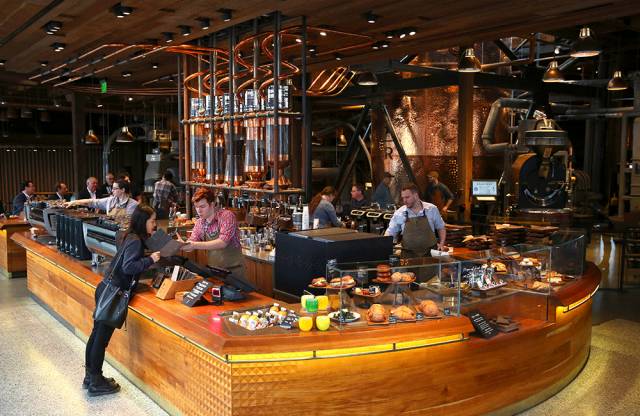
Starbucks tea industry, but a full attack on the Chinese mainland market, this will be a big bet?
For professional baristas, please follow the coffee workshop (Wechat official account cafe_style). On the evening of July 27 yesterday, Starbucks announced that it had formally reached its largest acquisition agreement to date with its long-term joint venture partners Uni-President Enterprise Co., Ltd. (Uni-President) and Unification Superstore Co., Ltd. (unified superstore). Starbucks will recover Starbucks with US $1.3 billion in cash.

Coffee: a commodity to be awakened by the Chinese factor
Elegant and romantic Starbucks, mellow cafes. What you may not imagine is that behind the quiet and pleasant scene is the choppy coffee market.

Learning coffee knowledge begins with understanding the three coffee waves.
At first, it was the delicious three-in-one instant coffee, and then it changed to the fancy coffee represented by Starbucks. Now, more and more people are beginning to accept drinking black coffee without sugar and milk to taste the pure flavor of the beans themselves. The first wave of coffee arose from instant coffee, represented by Nestl é and Maxwell, which tasted delicious and fragrant.

The "living fossil" of Chinese coffee waits for a hundred years of "encounter"
In the second pair of coffee shops, guests taste Zhukula coffee in front of the murals in Ha long Bay, Vietnam. Chinanews.com, Dali, April 11 (Miao Chao) more than 100 years ago, French missionaries planted coffee trees in Zhu Kula, a remote mountain village in Binchuan, Yunnan, opening the history of coffee cultivation in China. After a hundred years, Zhu Kula coffee was hidden in boudoir, until Binchuan welcomed a group of Vietnamese returned overseas Chinese. Reporter

Chinese people fall in love with coffee foreign coffee chains are growing rapidly in China
The picture of a Starbucks store in China comes from a report by foreign media on December 30 that many foreign brands and business models from Best Buy to B & Q have encountered a Waterloo in China. However, the Western retail concept of foreign coffee shops, which was perhaps the least likely to succeed, has flourished in China. According to a report on the Financial Times website on December 29,

Korean coffee brands have failed in China. Is there any hope for Chinese coffee brands in the Great Leap forward?
Professional coffee knowledge exchange more coffee bean information Please follow the coffee workshop (Wechat official account cafe_style) when a typical relevant investor is eager to enter the Chinese market, what factors will mess things up? A large-scale cafe expansion is in the pipeline. Seesaw announced last month that it had received 45 million RMB A round investment from Baifu Holdings, a subsidiary of Hony Capital.
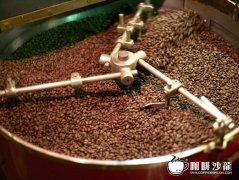
What should Chinese Coffee Development Hainan Coffee learn from Foreign Brands?
These days, a coffee chain brand from the United States is noticed by some media and complained by some netizens because of its price, but there is still an endless stream of coffee customers going to consume it. After all, with the improvement of people's spending power and the change of lifestyle, coffee consumption has become one of the trends for many people to pursue the quality of life. As an early area of growing coffee in our country
It's all about coffee. Colombian coffee beans. Gold of Aceh.
Anyone familiar with Starbucks knows that Starbucks founder and board chairman Howard Schultz wrote a book called "it has nothing to do with coffee." But in Pu'er City, Yunnan Province, China, which is famous for its Pu'er tea, it can be reversed that everything that is happening has something to do with coffee. In recent years, Pu'er has become the most important coffee bean producing area in China.

Chinese Coffee Bean Market Nestle Coffee Center stationed in Pu'er Industrial Park
After nearly 30 years of deep cultivation of Pu'er, the large-scale project of Nestle Coffee Center has recently officially entered the Pu'er Industrial Park. The center will greatly enhance its ability to provide training and technical support to farmers and coffee practitioners, and further improve and promote the development of Pu'er coffee industry. Representatives of Pu'er Industrial Park and Nestle Company jointly signed a cooperation agreement in Pu'er. Nestl é's pioneering role in Yunnan
Differences between SCAA&SCAE barista certification exams
SCAE (full name Specialty Coffee Association of Europe), translated as European Fine Coffee Association, also translated as European Special Coffee Association. Founded in London in 1998, it now has more than 3000 members in more than 70 countries and has established SCAE chapters in 35 countries, and the number is growing. SCAE is a professional.
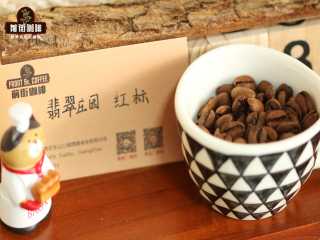
The Chinese name of Panama Geisha is "Rose Summer". Is it the same coffee as "Geisha"?
For the exchange of professional baristas, please follow the coffee workshop (Wechat official account cafe_style) Colombian coffee production situation Colombia has always been a large coffee grower, once contributed 10% of the total global coffee production, is an important producer of bulk commercial Arabica coffee. The existing coffee growing areas are generally divided.

Distribution characteristics of Coffee growing areas in Yunnan, introduction of Yunnan Coffee
Following Cafe Review (official Wechat account vdailycom) found that Chinese Coffee has been growing for more than 100 years, but the coffee industry has been open for only 20 years. It is understood that the earliest coffee industry in China appeared in Hainan. Hainan's Lishen Coffee has built an annual production line with an annual output of 325 tons of instant powder, and more domestic three-in-one coffee brands are using power.

Coffee in Zhukula Village, Yunnan Coffee Culture in China
When it comes to the history of Chinese coffee, we have to mention Yunnan Dali Zhukula Coffee, which plays a vital role in the history of Chinese coffee. The ancient coffee forest in Zhukula Village is a unique variety of small-grain coffee in Yunnan. It is very rare and of excellent quality. It can be called a living fossil of Chinese coffee. We went to explore the century-old coffee legend of Zhukula village. Zhu Kula, located in Yunnan Province
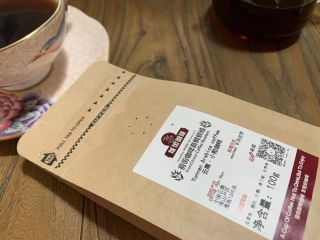
The best producing area of growing coffee beans in China the taste characteristics of Yunnan small grain coffee is sour and bitter.
Professional coffee knowledge exchange more coffee bean information please follow the coffee workshop (Wechat official account cafe_style) Qianjie-Yunnan Coffee introduction talk about Yunnan Province, which is currently the only high-quality coffee raw material production base in China, and it is also the earliest place to grow coffee in Chinese mainland area. Even if it is
Chinese Coffee Bean introduces Pu'er 's "Simao small seed Coffee"
Pu'er City is located between 22 degrees 02 to 24 degrees 50 minutes north latitude and 99 degrees 09 minutes to 102 degrees 19 minutes east longitude. Passing through the Tropic of Cancer, Pu'er City is a plateau climate zone with low latitude and humid monsoon climate in the south subtropics. It is in the same latitude as the world-famous coffee growing area Colombia, which is the golden zone of coffee cultivation. Cultivation of Simao small seed Coffee in Pu'er City